+254 720 973 404 | info@swiftstrides.com
Importing Through the Port of Mombasa: 2026 Guide

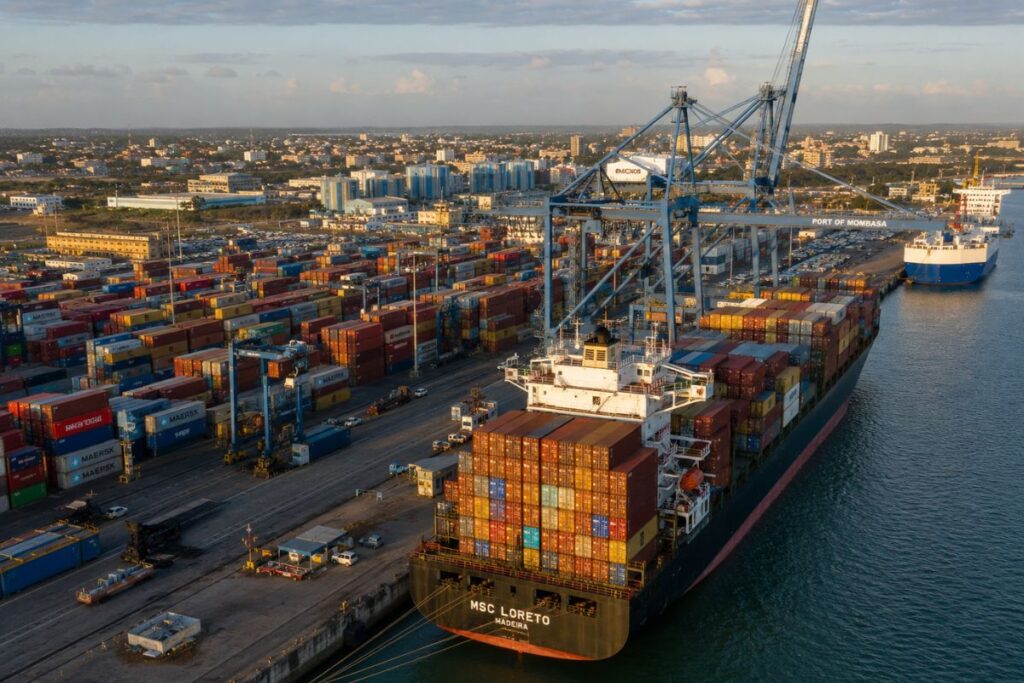
The Port of Mombasa is the busiest and most strategically important port in East Africa, handling cargo destined not just for Kenya but for Uganda, Rwanda, South Sudan, DRC, and Burundi. If you’re a business owner, trader, or importer planning your first shipment—or trying to make your existing process more efficient—understanding exactly what importing through the Port of Mombasa involves can save you weeks of delays and thousands of shillings in avoidable charges.
This guide walks through the full process step by step, from choosing a shipping line to getting your cargo released and on the road.
Why the Port of Mombasa Is East Africa’s Gateway for Imports
Mombasa handles the vast majority of Kenya’s seaborne trade and serves as the primary transit route for landlocked neighboring countries. Its position on the Indian Ocean puts it on major shipping lanes connecting Asia, the Middle East, Europe, and the Americas to the East African hinterland.
Importing Through the Port of Mombasa: Step-by-Step Process
Every shipment follows roughly the same sequence, whether you’re bringing in machinery, vehicles, or consumer goods.
Step 1 – Choosing a Shipping Line and Freight Forwarder
Before your cargo even leaves the origin country, you’ll need a shipping line (or an NVOCC operator consolidating cargo) and a freight forwarder on the ground in Kenya to manage clearance on arrival. This decision affects your transit time, your visibility into where your cargo is at any point, and ultimately how smoothly the rest of the process goes.
Step 2 – Documentation Required for Clearance
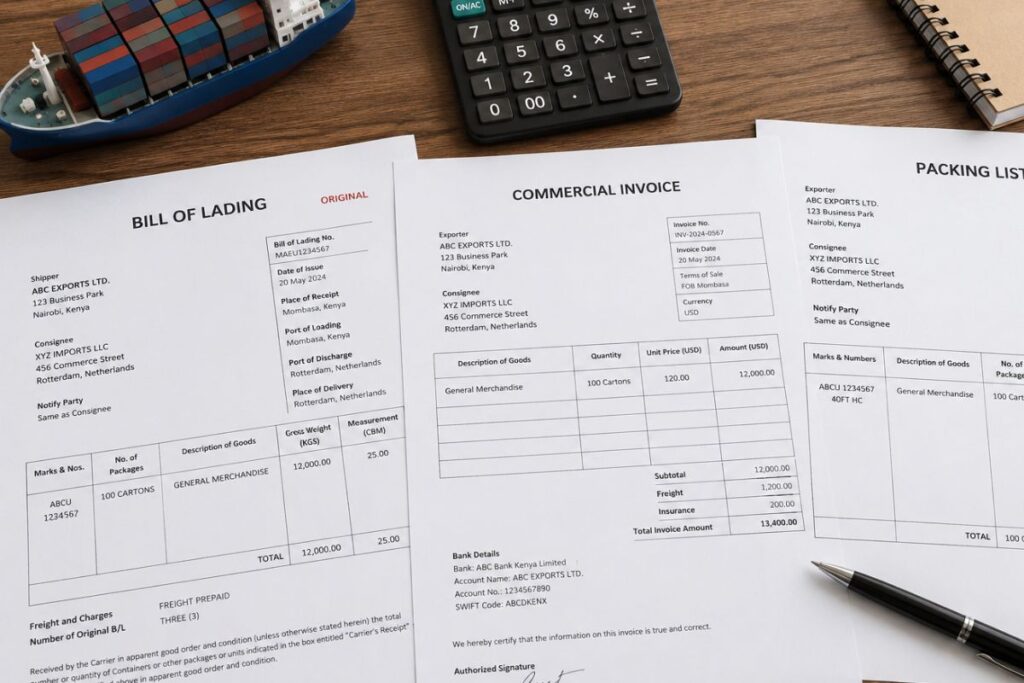
Before your container arrives, your forwarder should already be preparing the paperwork Kenyan customs will require, including the bill of lading, commercial invoice, packing list, certificate of origin, and import declaration form (IDF). Missing or incorrect documentation is the single biggest cause of delay when importing through the Port of Mombasa.
Step 3 – Customs Declaration and Duty Assessment
Once your cargo lands, it’s declared through Kenya’s customs systems, and duty is assessed based on the customs value, HS code classification, and applicable tax regime. This is where working with an experienced clearing agent pays off — misclassification can lead to either overpaying duty or facing penalties for underdeclaration.
Step 4 – Container Release and Inland Transport
Once duty is paid and documentation clears, your container is released from the port and transported inland — typically by road to Nairobi or beyond, or by the Standard Gauge Railway (SGR) for containerized cargo heading to Nairobi.
Common Costs to Budget For When Importing Through the port of Mombasa
Cost overruns usually come from charges people don’t budget for upfront rather than the freight cost itself.
Freight and Shipping Charges
This is the base cost of moving your cargo from origin to Mombasa, and it varies by cargo volume, whether you’re shipping FCL or LCL, and current freight rates.
Port Charges and Demurrage
Beyond freight, you’ll pay port handling charges, and if clearance takes longer than the free storage period, demurrage and detention charges accumulate daily.
How Demurrage Charges Accumulate If Clearance Is Delayed
Most shipping lines allow a limited number of free days at the port (often 4–7 days) before demurrage kicks in. Each additional day can cost anywhere from a few dollars to over $100 per container per day depending on container size and the shipping line’s tariff. This is precisely why fast, accurate documentation at Step 2 matters so much — a two-day paperwork delay can quietly cost more than the freight itself.
Common Challenges Importers Face and How to Avoid Them
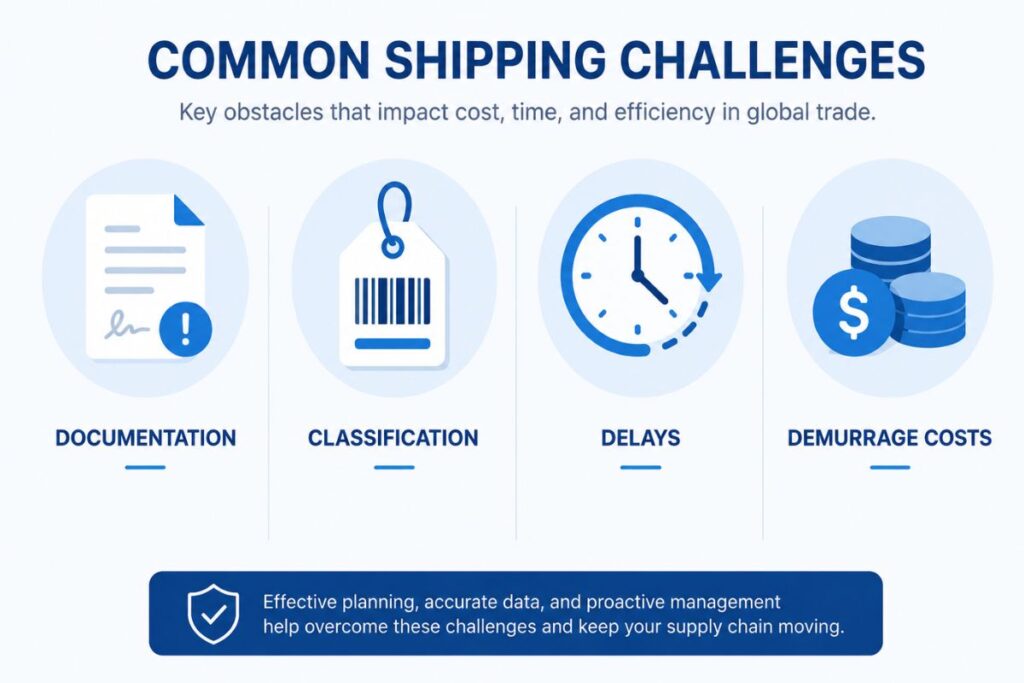
- Incomplete documentation — resolved by having your forwarder pre-verify paperwork before the vessel arrives.
- HS code misclassification — resolved by using an experienced clearing agent familiar with KRA’s current tariff book.
- Congestion-related delays — mitigated by booking inland transport in advance rather than after release.
- Unbudgeted demurrage — mitigated by tracking free-day windows closely and pushing for early clearance.
Why Work With a Licensed Clearing and Forwarding Agent
Given how many moving parts are involved in importing through the Port of Mombasa, most businesses — even experienced ones — choose to work with a licensed clearing and forwarding agent rather than manage the process themselves. A good agent handles documentation, liaises directly with KRA and KPA, tracks your cargo status in real time, and coordinates inland transport so your goods reach their final destination without unnecessary delay.
Final Thoughts
Successfully importing through the Port of Mombasa comes down to preparation: choosing the right partners, having documentation ready before your cargo arrives, and understanding the cost structure so nothing catches you off guard. Whether this is your first shipment or your hundredth, the fundamentals above will keep your cargo moving efficiently from origin to final delivery.