+254 720 973 404 | info@swiftstrides.com
Mombasa to Nairobi Road Transport Guide 2026

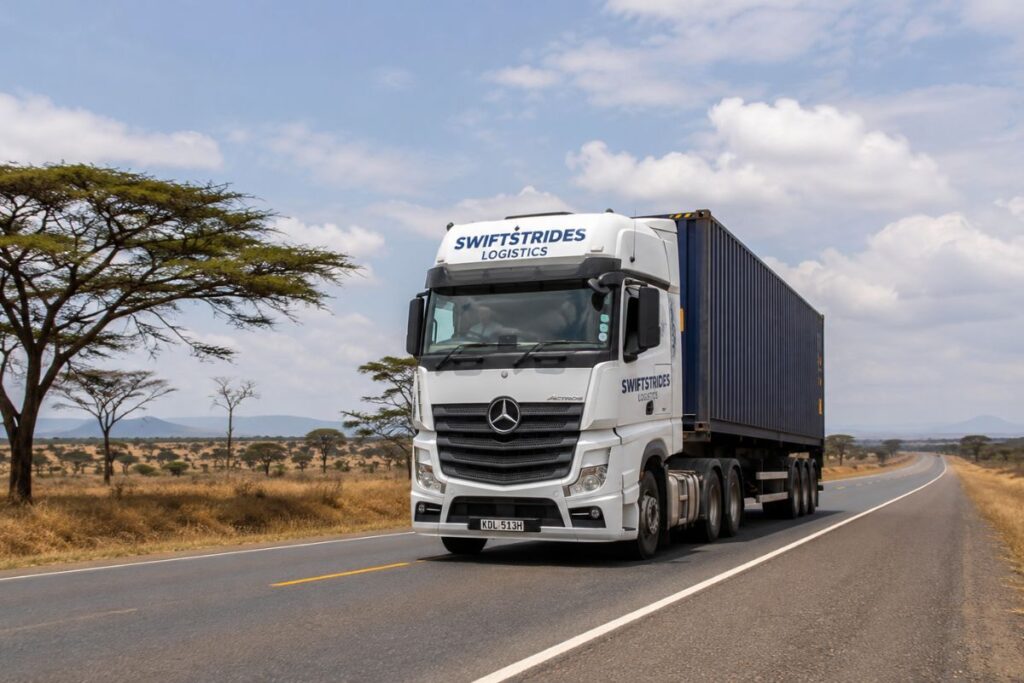
For any business moving cargo from the coast to Kenya’s capital, Mombasa to Nairobi road transport remains the backbone of the country’s supply chain. Whether you’re bringing in machinery, consumer goods, or raw materials through the Port of Mombasa, understanding how long the journey really takes, what it costs, and where delays typically happen will help you plan realistic delivery timelines for your customers or operations.
This guide breaks down the route, the timelines you should actually budget for, and what’s changing on this corridor in the near future.
The Route: Understanding the A109 Mombasa Road Corridor
The primary route for Mombasa to Nairobi road transport is the A109 highway, commonly known as Mombasa Road, covering roughly 480 kilometers between the two cities. The route runs through Voi, Mtito Andei, and Athi River, cutting between Tsavo East and Tsavo West National Parks along a large stretch of the journey.
Why Cargo Trucks Take Longer Than Passenger Vehicles
While a passenger car can cover this route in around 7 to 8 hours under normal conditions, cargo trucks doing Mombasa-to-Nairobi road transport typically take considerably longer—often 24 hours or more for a fully loaded container truck. The gap comes down to a few recurring factors specific to freight movement rather than passenger travel.
What Actually Slows Down a Loaded Cargo Truck
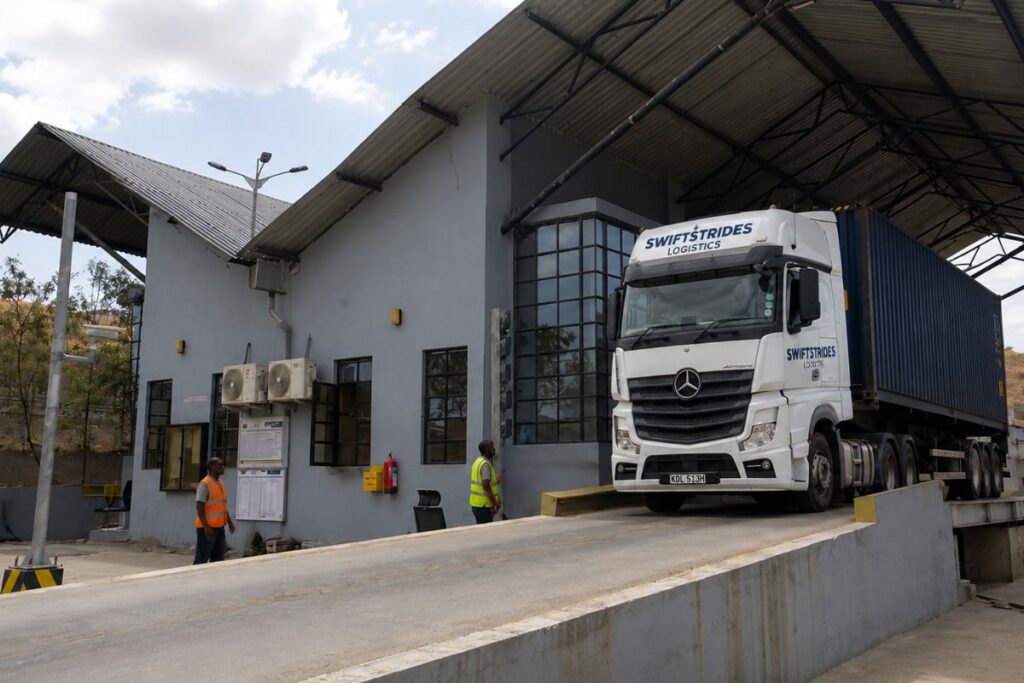
Weighbridge stops account for a meaningful chunk of transit time, since every truck must be checked to confirm it isn’t overloaded before continuing. On top of that, police checkpoints along the corridor — sometimes numbering close to ten across the full journey — add further stops, and drivers are legally required to rest during long hauls rather than driving through the night in one stretch. Put together, these factors are why a realistic cargo timeline looks very different from a tourist’s road-trip estimate.
Alternatives to Road: When SGR Makes Sense for Cargo
Road isn’t the only option for moving containers inland. The Standard Gauge Railway (SGR) operates a dedicated freight service between Mombasa and the Nairobi Inland Container Depot, separate from the passenger Madaraka Express. For high-volume or time-sensitive containerized cargo, rail can offer a more predictable schedule than Mombasa to Nairobi road transport, since it isn’t subject to the same weighbridge and checkpoint delays trucks face.
Choosing Between Road and Rail for Your Cargo
The right choice usually comes down to your cargo’s final destination and urgency. Road transport offers direct door-to-door delivery without transloading, which matters if your final destination isn’t near the Nairobi ICD. Rail can be more cost-predictable for standard containerized cargo heading straight to Nairobi but typically involves an additional trucking leg once the container reaches the depot.
What’s Changing: The Nairobi–Mombasa Expressway
A major shift is underway for this corridor. Construction on the Nairobi–Mombasa Expressway—a 459-kilometer toll road—is set to begin in 2026, designed to cut travel time between the two cities from over ten hours down to roughly four and a half hours. Notably, the project’s developers expect heavy trucks to make up the majority of traffic on the route, with cargo vehicles contributing up to 75% of toll revenue, meaning this expressway is being built with freight transport specifically in mind.
How the Expressway Could Change Cargo Transit Times
Once operational, the expressway is expected to significantly shorten Mombasa to Nairobi road transport times for businesses willing to pay the toll—reported at roughly KES 12–13 per kilometer for the full stretch. For businesses running time-sensitive cargo, this could eventually make road transport considerably more competitive against rail on speed, even though the standard Mombasa Road route will remain open for those who prefer not to use the toll road.
Why Work With an Experienced Transport Partner
Navigating weighbridge requirements, checkpoint documentation, and choosing between road and rail options is easier with a partner who moves cargo on this corridor regularly and can advise on the most efficient option for your specific cargo type and destination.
Mombasa to Nairobi road transport is central to how goods move through Kenya, and understanding the realistic timelines — not just the best-case scenario — is what separates smooth logistics planning from missed delivery promises. With the new expressway on the horizon, this corridor is set to change meaningfully in the coming years, but for now, planning around current realities is the safest approach.